

A new AI assistant is entering the increasingly crowded personal-agent market with a familiar promise but a different emphasis: Hark wants to become the software that can actually operate your digital life while keeping privacy at the center of the experience.
Hark, the latest startup from serial entrepreneur Brett Adcock, has launched Hark Pro to the public after spending months developing the product. The service is available for free, with paid plans designed for users who need higher usage limits.
Rather than positioning Hark as another chatbot, the company describes it as a new interface for interacting with computers. Its AI is specifically trained for computer use, allowing Hark to navigate websites, interact with online services and perform tasks on a user’s behalf.
The product enters a market that is rapidly becoming one of the most competitive areas in consumer AI. Startups such as Instinct and Dots, along with Meta’s Muse, are all working toward assistants that can do more than answer questions. They can search the web, manage email and calendars, make purchases and complete other tasks that previously required users to interact with multiple applications themselves.
Hark Pro takes that concept a step further by attempting to make the computer itself disappear from the user’s workflow. Instead of opening a browser, finding the right website and completing a series of steps manually, users can simply tell Hark what they want accomplished.
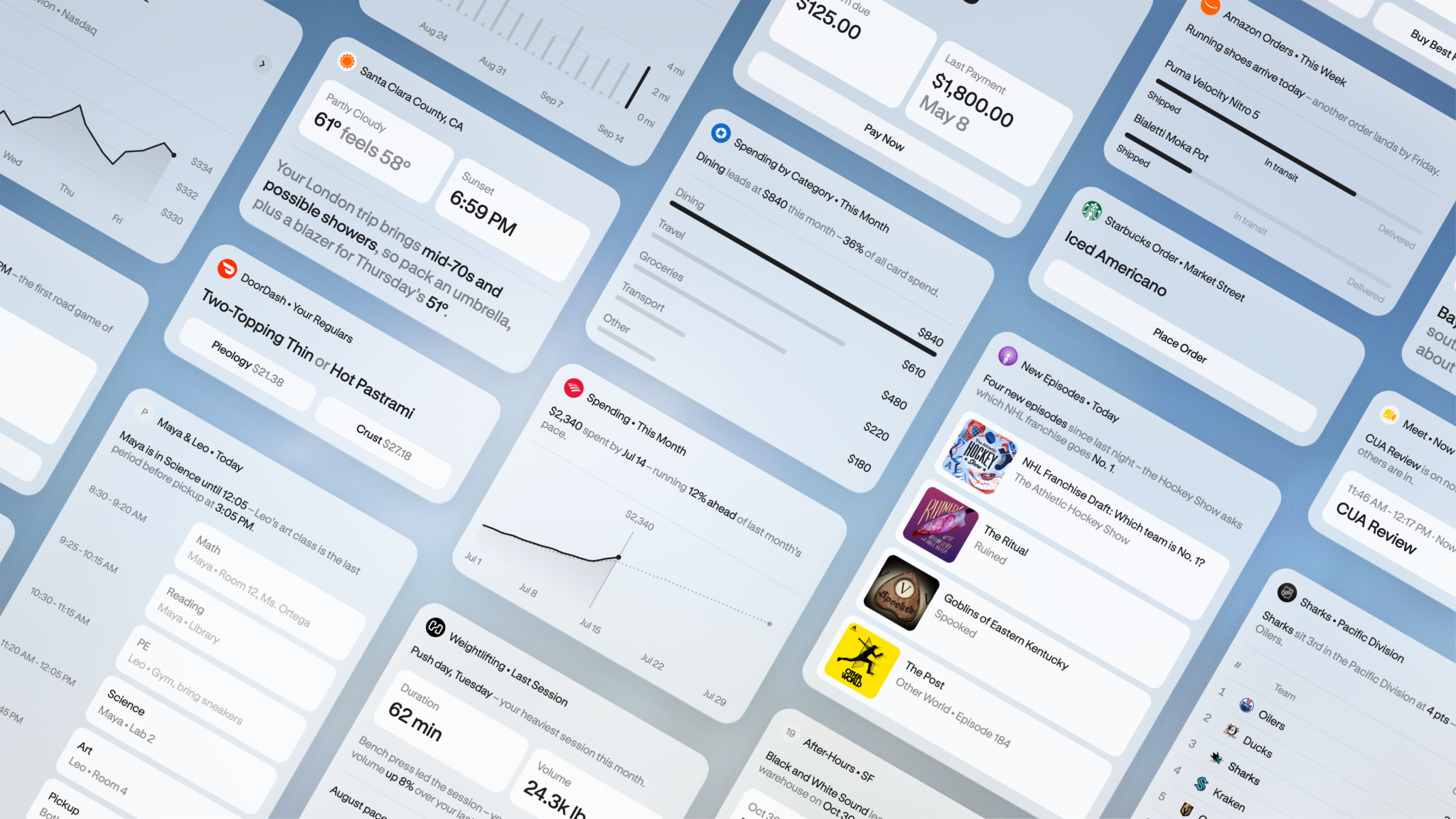
The interface combines a central conversation window with a personalized home screen containing suggested actions and small dashboards, which Hark calls “panels.” The system can proactively identify things that may require attention, such as unanswered emails, expenses awaiting approval or upcoming travel arrangements.
During a product demonstration, Hark’s design lead Abidhur Chowdhury showed how the assistant could recognize tasks that needed to be completed and offer to handle them. In one example highlighted by the company, Hark identified that a user’s colleague needed to renew a vehicle registration through California’s DMV website and was able to complete the process.
One of Hark’s most notable design decisions is that users can actually see the AI navigating the web while it works. Instead of hiding the agent’s actions behind the interface, Hark displays its browser activity in a separate window.
That transparency is particularly important because personal AI assistants require an unusually high level of access to users’ digital lives. Hark can be connected to email, calendars, files and payment information, allowing it to perform tasks that would otherwise require direct access to multiple accounts.
The company is making privacy a central part of its pitch as a result. Hark says it is not building its business around advertising or selling user data, while its security system, called “Secured by Hark,” is designed to protect sensitive information such as passwords and credit card details. The company’s privacy policy says Hark stores credentials in an encrypted vault and uses isolated sandbox environments when its AI performs tasks.
That promise comes at a particularly important moment for the personal-agent industry. Early users of competing assistants have increasingly raised concerns about privacy, unexpected behavior and the amount of access these products require. Some users have even restricted or deleted their agents after experiencing security scares or being uncomfortable with how much personal information the systems could access.
Hark is betting that showing users exactly what the AI is doing can help build the trust required to make these products mainstream.
The company is also taking a different technical approach from some of its competitors. Instead of relying primarily on a general-purpose frontier model, Hark has developed a model specifically optimized for computer use. That specialization is intended to make the system faster and cheaper when performing tasks on a computer, although it also raises questions about whether a specialized model can match the broader reasoning and knowledge capabilities of the largest general-purpose AI systems.
Hark’s ambitions extend beyond software. The company is also developing an AI-native hardware device that it plans to introduce in 2027. Details remain limited, but the team has indicated that the device will be designed around a fundamentally different approach to personal computing rather than simply becoming another screen-based assistant.
Brett Adcock has already demonstrated an appetite for ambitious technology businesses. His previous ventures include Archer Aviation and Figure AI, while Hark has attracted substantial attention and investment from major technology investors. The startup is now attempting to apply that experience to a different challenge: building an AI system that can become the primary interface between people and their digital lives.
The opportunity is enormous, but so is the challenge. For an AI assistant to become genuinely useful, it needs to know enough about a person to anticipate what they need. At the same time, the more it knows, the greater the privacy and security risks become.
That tension could ultimately define the personal AI market. The winning assistant may not simply be the one that can perform the most tasks. It could be the one that convinces users to trust it with enough information to perform those tasks in the first place.
Hark is betting that privacy, transparency and the ability to actually operate a computer will be enough to earn that trust.
Leave a Reply