

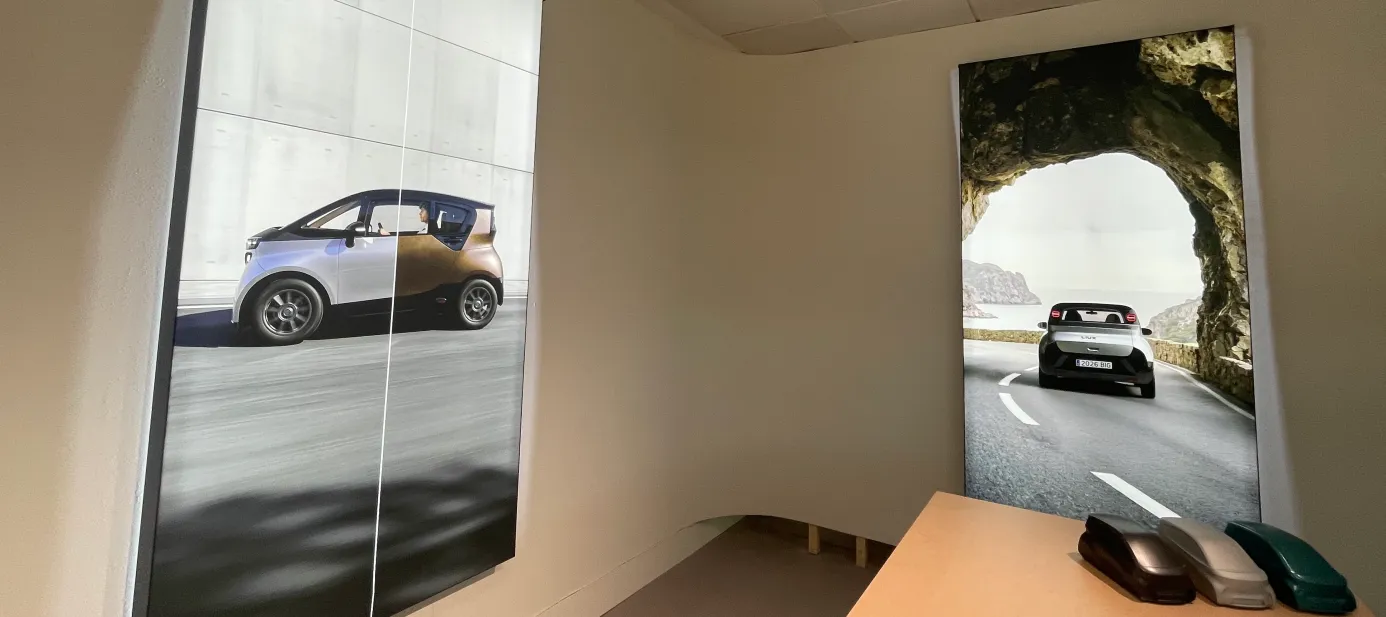
As compact urban vehicles increasingly dominate European city streets, Spanish EV manufacturer Liux is preparing to enter the competitive microcar market with the Liux Big. Designed to offer a sustainable alternative to imported Chinese electric vehicles and legacy compact brands, the tiny two-seater is engineered around circular design principles and local assembly.
The startup, founded by CEO Antonio Espinosa de los Monteros and chief engineer David Sancho, operates out of Azuqueca de Henares—marking Spain’s first new automotive manufacturing facility in over three decades. While relying on international suppliers for battery cells, Liux focuses on domestic assembly, recyclable materials, and low-footprint manufacturing.
Key Features and Sustainable Engineering
-
Biocomposite Bodywork: The vehicle’s exterior paneling utilizes a novel linen-based biocomposite structured for straightforward disassembly and material recycling.
-
Charging & Power: Features home-rechargeable battery packs compatible with residential solar energy setups.
-
Cargo & Frame Safety: Optimized under the European L7e vehicle category, the car incorporates a 260-liter trunk alongside a reinforced frame designed for enhanced stability, braking, and crash resistance.
-
Modular Upgrades: Engineered to extend hardware life cycles and reduce rapid obsolescence.
Homologation, Production Plans, and Market Positioning
Liux has officially secured Europe-wide L7e homologation for the Liux Big, with commercial sales slated to begin in the first half of 2027. The company projects an annual manufacturing capacity of up to 20,000 units across three Spanish facilities by 2030, operating under lean production frameworks led by former BMW engineer Beatriz Belda González.
Targeted primarily as an eco-friendly second car for urban households, the vehicle has generated a non-binding waitlist of over 7,500 prospective buyers. Expected to launch at a base price below €18,000 (approximately $21,000) prior to government EV incentives, Liux is also exploring corporate fleet partnerships and future autonomous technology integration.
Leave a Reply